
For generations, public parks have been designed and programmed around familiar amenities such as basketball courts, tennis courts, sports fields, playgrounds, and pavilions. Today, however, public parks are being used for more than leisurely pick-up games and birthday parties. Food truck rallies, fitness and wellness events, movie nights, cultural celebrations, concerts, and other community programs are transforming public parks into versatile venues for social and civic activity.
As expectations for public parks continue to expand, three park typologies are becoming important to this evolving role: signature parks, civic parks, and recreation parks. This evolution in how public parks are used demonstrates that their value extends beyond recreation. Parks are increasingly serving as hubs for community interaction that contribute to the cultural and civic life of the communities they serve.
Signature Parks
Unlike public parks designed primarily to serve surrounding neighborhoods, signature parks are destination-oriented public spaces that attract visitors from across a city or region. Many feature large event lawns capable of hosting regional and national festivals. Grand promenades frame iconic views and connect visitors to flexible gathering areas, creating layered experiences that encourage exploration rather than simple occupation. These connections also link parks to adjacent neighborhoods, commercial districts, transit stations, waterfronts, and other points of interest. By connecting major destinations and attracting visitors from beyond the immediate community, signature parks can become economic assets that support tourism and catalyze surrounding urban activity.
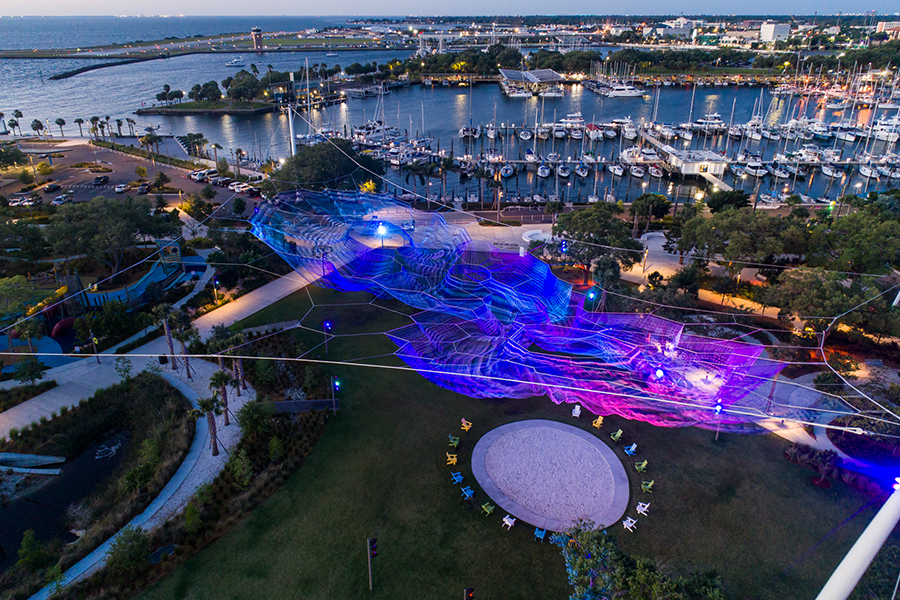
Although signature parks are designed to host large events, they must also adapt to remain active when no major event is taking place. Successful signature parks support everyday activities such as running, biking, picnicking, and dog walking while retaining the infrastructure and flexibility needed for large-scale events. This duality allows the park to function as both an everyday community asset and a regional destination. The scale and flexibility of signature parks also allow them to contribute to cultural and civic life. Landscape, architecture, public art, and programming can connect communities to their history and create associations with a city or region. The Pier Approach Park, designed by WJArchitects, embodies this through Bending Arc, a public artwork by local artist Janet Echelman. The installation acknowledges St. Petersburg’s Civil Rights history, which recognizes the legacy of African American residents challenging the segregation of Spa Beach and Spa Pool. Beneath the sculpture, the landscape mirrors the undulating form of the net, creating curved spaces where visitors can gather, relax, and look upward toward the illuminated canopy.
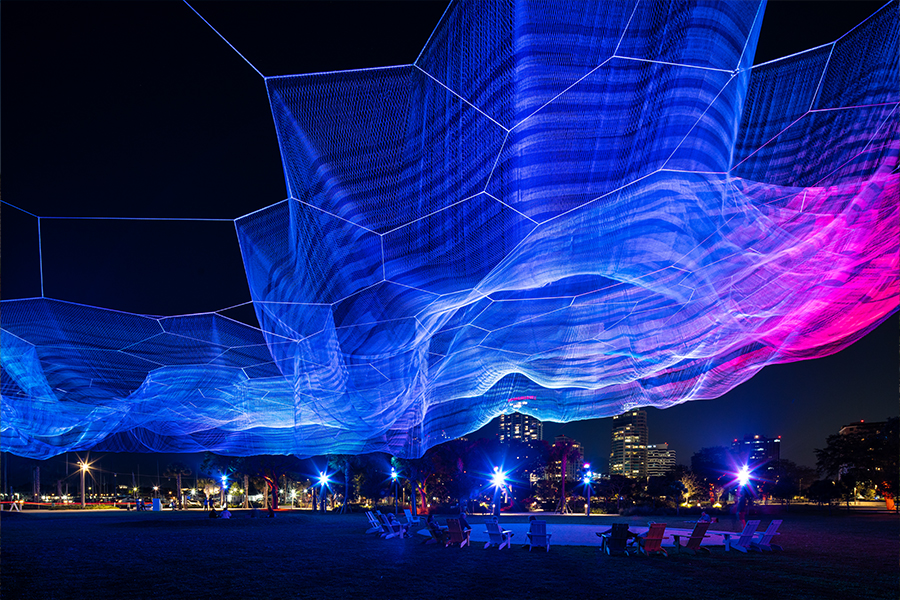
Bending Arc - St. Pete Pier Approach
The park’s everyday programming reinforces this dual role. Current programming at the St. Pete Pier includes Pilates, sunset yoga, barre, and Movement Mondays, while the Family Park provides a playground and splash pad for younger visitors. The waterfront setting also supports large celebratory gatherings, including the Fourth of July fireworks viewing, demonstrating how the park can transition from an everyday recreational landscape into a large gathering destination.
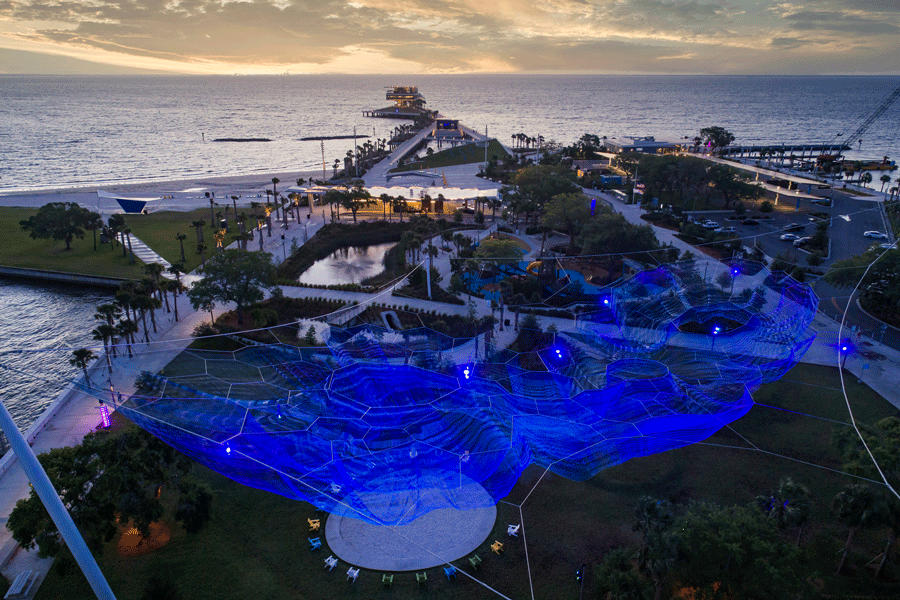
St. Pete Pier Approach
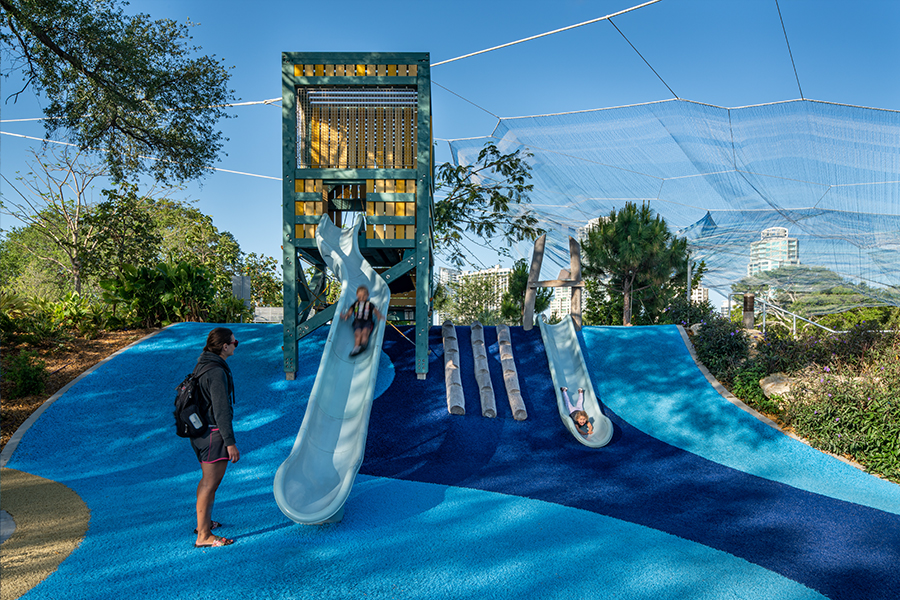
Family Park
Civic Parks
Public parks that support local community life often sit at the intersection of cultural, civic, and commercial activity. The proximity of civic parks to cultural institutions, restaurants, Main Streets, residential communities, and government buildings allows them to function as extensions of the surrounding civic core and social infrastructure. These spaces can accommodate cultural events, community celebrations, movie nights, school recitals, farmers markets, and other activities that bring residents together. Waterfront locations provide another opportunity for civic parks to serve as public infrastructure by offering access to kayaking, paddleboarding, canoeing, boating, and other watersports. Integrating water into the public realm can strengthen community identity and cohesion. Furthermore, the design of civic parks can preserve waterfront access to the public for gathering and recreation while serving as multimodal connectors for pedestrians, cyclists, transit users, and boaters. Beyond their role in connecting communities to surrounding destinations, civic parks should be designed to accommodate local events while maintaining a comfortable, flexible public space. These events can introduce vendors, equipment, and crowds that disrupt everyday circulation. One solution is to establish a hierarchy of circulation in which primary pathways accommodate event crowds, secondary pathways provide quieter routes for everyday users, and dedicated service access allows vendors and equipment to reach event areas without disrupting public circulation.
Well-designed civic parks can support both local events and everyday activities, allowing them to contribute to the civic and cultural life of surrounding communities. Sims Park, designed by WJArchitects in New Port Richey, demonstrates this versatility by hosting events such as the Hometown Extravaganza, End of Summer Spectacular, Free Family Movie Nights, and Concert in the Park series. The park also supports small gatherings with picnic tables and grills located near a playground and splash pad.
Sims Park demonstrates a hierarchy of circulation that connects the parking lot to major destinations, including the amphitheater, playground, Orange Lake observation deck, and kayak launch. Secondary walkways branch from these primary paths to connect grassy lawns with benches, picnic tables, and pedestrian-scale lighting. This organization allows the park to transition between community events and everyday gatherings, supporting both organized civic activity and informal social interaction.
Recreation Parks
Recreational parks provide residents with more than just places to exercise or play. These community assets support health, social connection, personal development, and community life by providing opportunities for active recreation, structured programming, and social interaction. Sports such as basketball, soccer, volleyball, tennis, and pickleball are often paired with summer camps, before- and after-school care, senior activities, aquatic programs, and dance classes, creating opportunities for residents across different ages and interests. These parks are often located near residential areas, major roads, transit routes, and schools, making active, structured, and fitness-oriented recreation more accessible to the surrounding community.
The diverse programming of recreational parks creates opportunities for strategic architectural and site-planning decisions that allow multiple activities to occur simultaneously. When a youth football game and club volleyball tournament are taking place alongside a day camp in the community center, the challenge becomes creating a design that can accommodate these overlapping programs while minimizing conflicts between users.
One solution is to organize the public park around a gradient of activity, transitioning between high-intensity recreation to low-intensity recreation. These transitions can include sidewalks, walking trails, and natural features such as bioswales, while positioning high-energy activities away from quieter spaces to help manage noise.
The ability to accommodate activities of varying scales and intensities allows residents to use recreational parks repeatedly throughout the week. Frequent use creates opportunities for low-pressure social interactions that can strengthen relationships and contribute to the cultural and civic life of the community. Doral Legacy Park, designed by WJArchitects, embodies this approach through programming from youth football to field hockey, adult table tennis to group swim lessons, and Special Olympics Pickleball to Jazzercise for seniors. This range of programming creates opportunities for inclusive, intergenerational activity while allowing residents with different interests and abilities to share the same recreational campus.
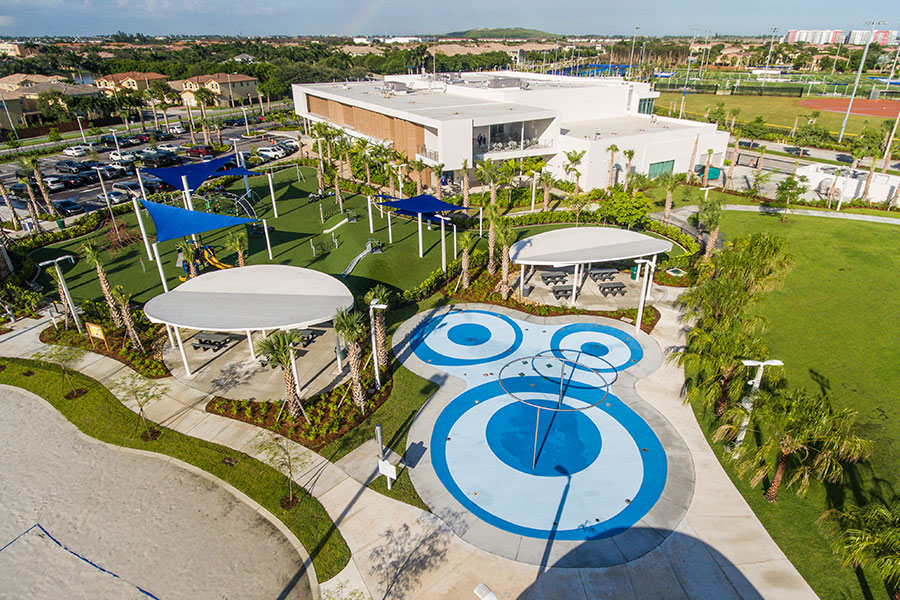
Doral Legacy Park
The park’s design reinforces this diversity by organizing activities according to intensity. Rather than using sidewalks, vegetation, or natural features to create a gradual transition between high- and low-intensity activities, Doral Legacy Park uses NW 112th Avenue as a distinct boundary between the two zones. Lower-intensity activities are located west of the thoroughfare and include the community center, playground, splash pad, pavilions, and play fields. Higher-intensity activities are located to the east and include football and soccer fields, basketball and tennis courts, and a baseball field. A pedestrian bridge connects the zones, allowing residents to move throughout the park without the roadway becoming a barrier to access. Together, the park’s programming and spatial organization demonstrate how recreational parks can accommodate diverse activities while encouraging community interaction.
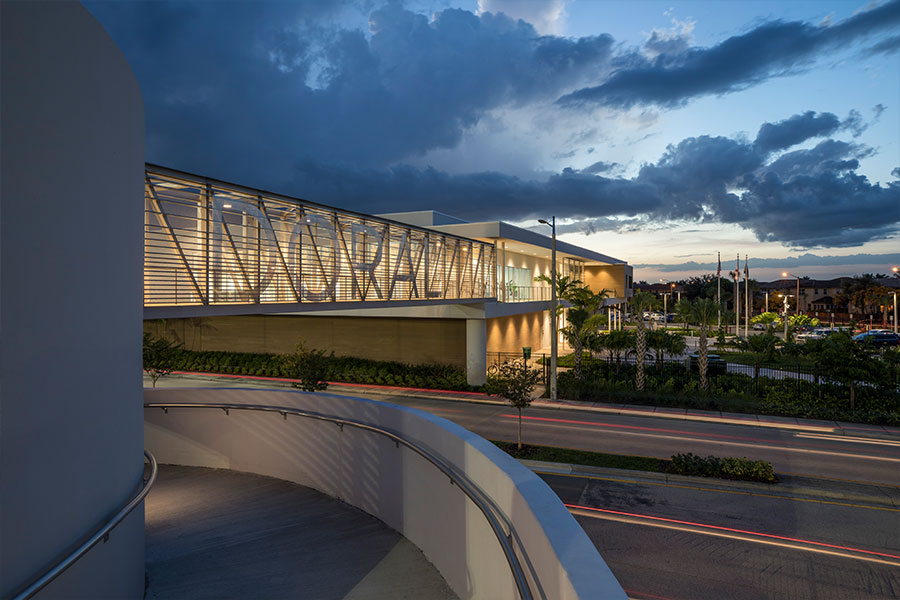
Doral Legacy Park
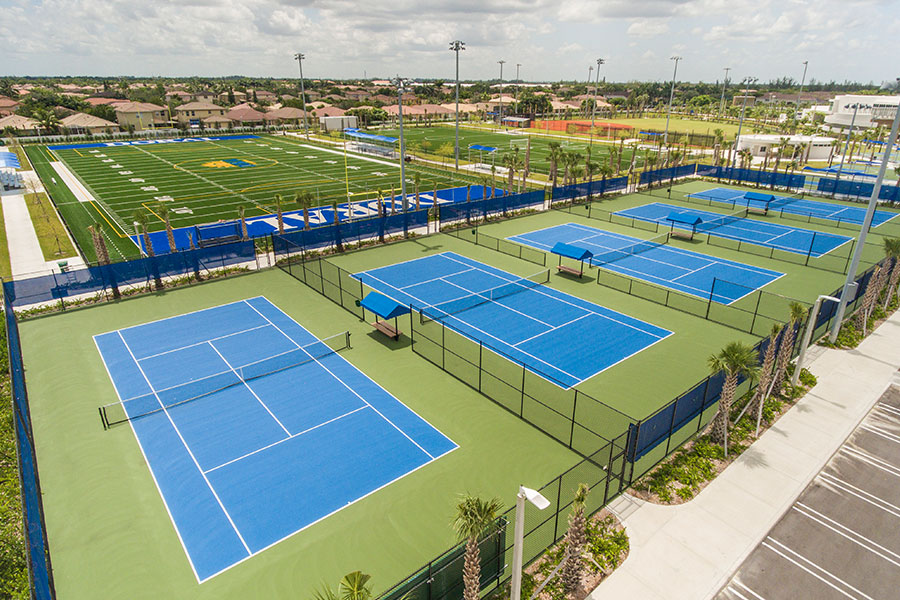
Doral Legacy Park
The contemporary public park is no longer defined by a single function. Its success depends on its ability to accommodate different scales, activities, users, and experiences while reinforcing the identity and social infrastructure of the population it serves. As communities continue to use public parks for wellness events, cultural traditions, social gatherings, and everyday recreation, these spaces have become essential components of community infrastructure.
Signature parks create places people identify with, civic parks create places where communities gather, and recreation parks create places where communities participate. Each park responds to different community needs, but all demonstrate how successful public spaces are designed around the emerging needs of the communities they serve. By considering programming, circulation, flexibility, accessibility, and the relationship between active and passive uses, architecture and urban design can create parks where communities gather, connect, and develop a shared sense of identity.