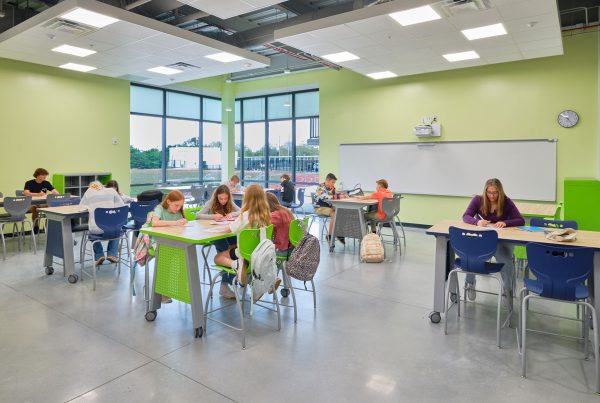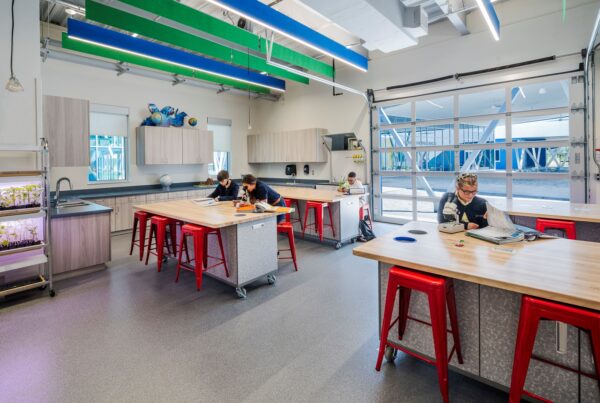

Flexible learning environments are changing the way schools view spaces. Previously, school districts across Florida designed and constructed educational facilities for an era of education that prioritized teacher-led instruction and standardized, lecture-based learning. Currently, classrooms are expected to support a diverse range of teaching methods from direct instruction to group work, independent study, and project-based learning.
The evolution of instructional practice created a disconnect between how students learn and how schools are designed. Campuses throughout the state rely on fixed classroom layouts and rigid building structures that were not originally planned to support collaborative approaches to learning.
As a result, schools are asked to function as long-term public investments in education while also adapting to instructional methods and technologies that evolve more rapidly than the buildings themselves. The challenge facing school districts today is the ability to ensure that educational facilities can accommodate emerging instructional practices that will continue to change throughout the building’s lifespan.
The Importance of Flexible Learning Environments
Instructional flexibility depends not only on teaching practices, but also on the ability of classrooms to adapt to those practices. Rigid classroom design creates constraints in placing desks and learning stations, resulting in the inability to make micro-adjustments to cater to student needs. Fixed seating and crowded classrooms make movement through the classroom difficult, which hinders the ability to manage student behavior proactively due to obstructed sightlines. Blind spots in classrooms can also contribute to the uneven distribution of teacher attention, making it more difficult to maintain consistent engagement across the learning environment.
Spatially fixed classroom design also constrains teaching by limiting the teacher’s ability to reorganize space in a fashion that responds to changing instructional needs within a single lesson.
This creates a friction point for teachers, since contemporary instruction frequently requires students to transition between whole-group instruction, small-group collaboration, independent work, and project-based activities within a single class period. Traditional classrooms were designed for a very different model of teaching. Fixed furniture, front-facing layouts, and limited breakout space can make it difficult to support the active, collaborative learning that today’s students need. Supporting this connection, Barret et al. found that classroom design accounted for approximately a 16% difference in student learning progress, compared to just a 3% variation attributable to differences between schools. These findings highlight the importance of designing learning environments that are adaptable to the instructional practices they support.
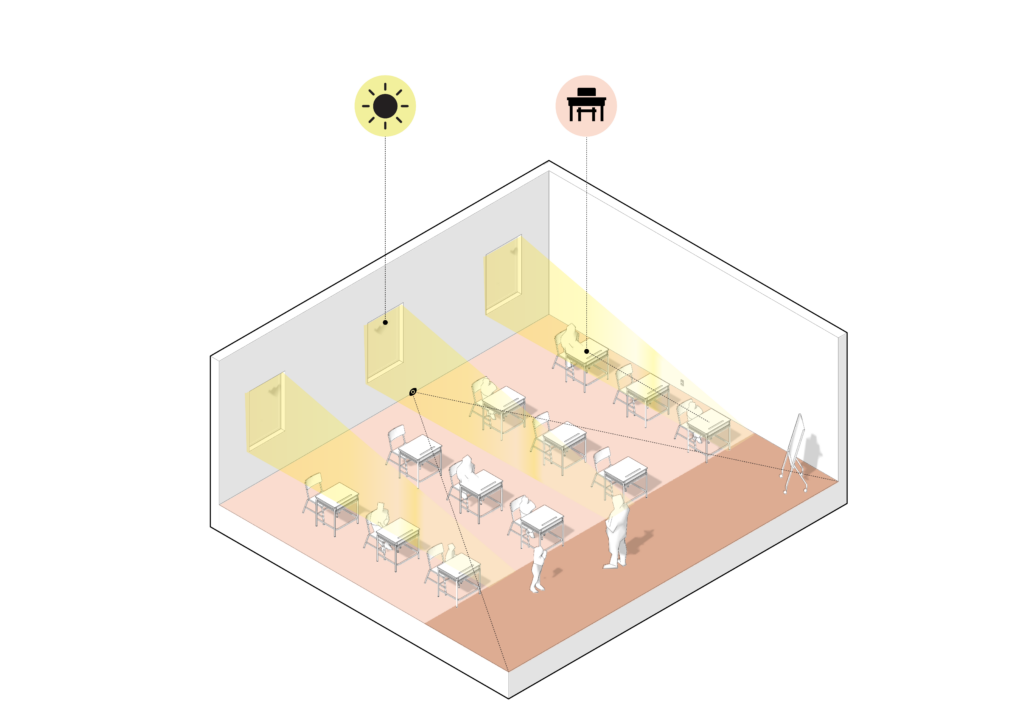
Traditional classroom lacking flexible environments
Adaptable Facilities as a Strategy to Accommodate Changing Teaching Styles
As pedagogical models continue to evolve, school facilities must be redefined as adaptable infrastructure systems capable of supporting students, teachers, and staff across changing teaching styles. By providing flexible learning zones, reconfigurable furniture arrangements, and versatile spaces that nurture collaboration and independent study, renovated facilities allow instructional environments to adapt alongside changing teaching practices.
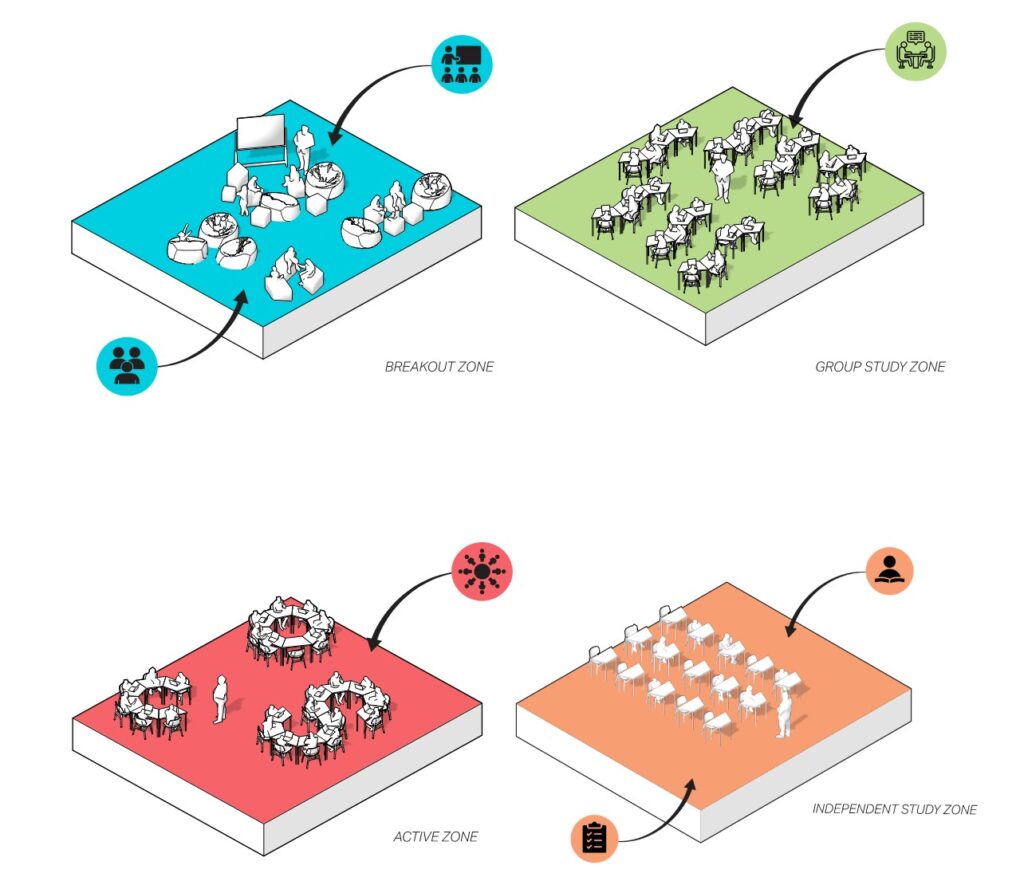
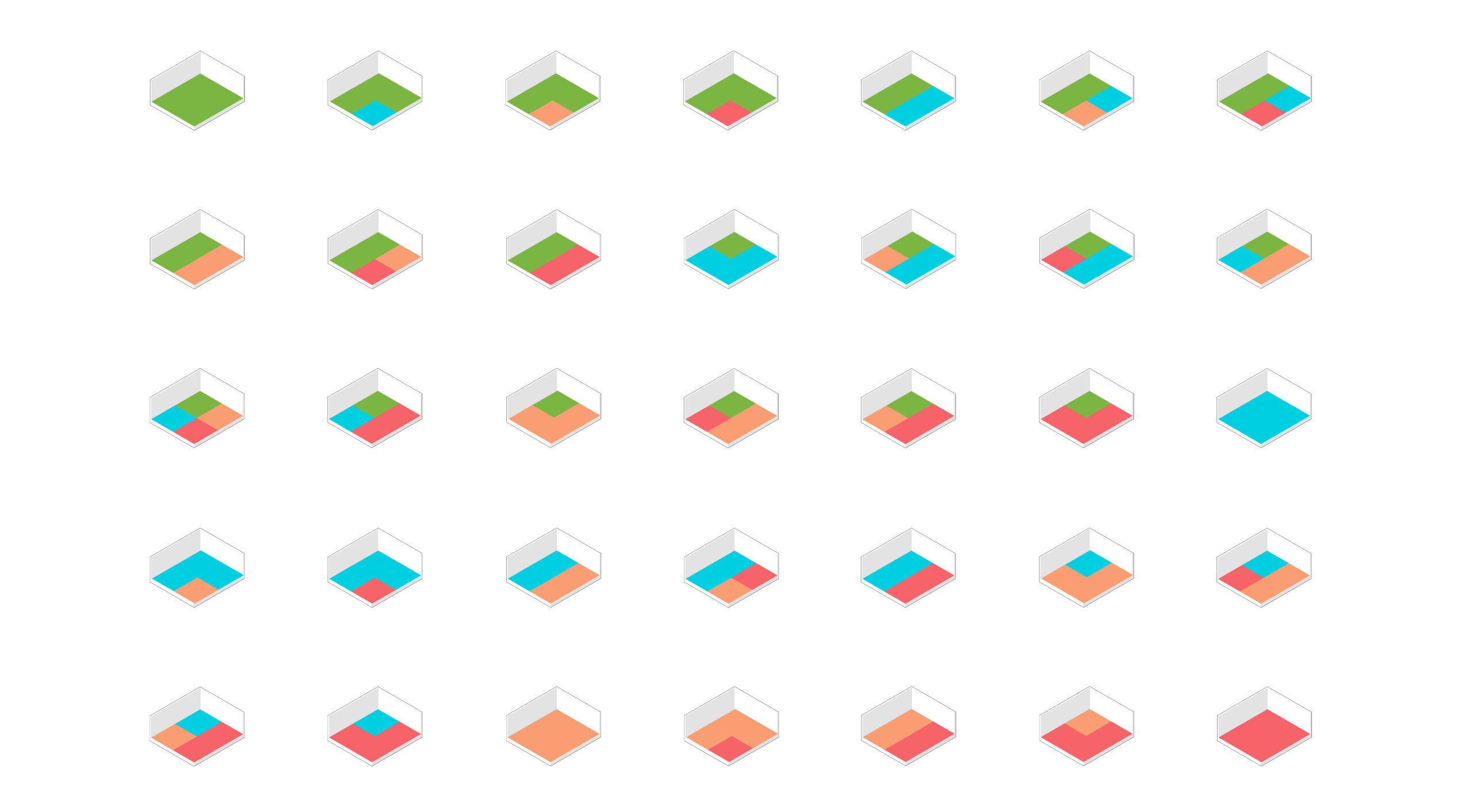
Flexible Classroom Zones
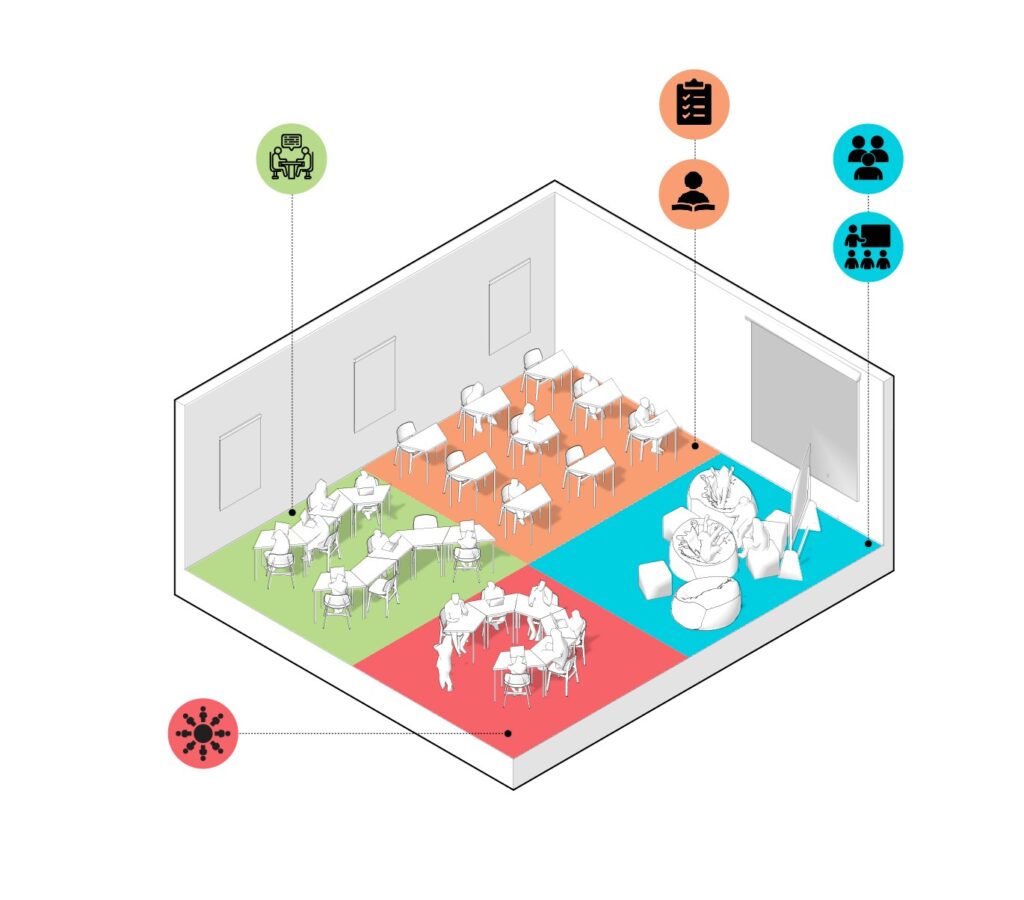
Possible configuration in an adaptable classroom
Adaptable learning spaces will also benefit students with learning challenges and special needs, since these facilities have the capacity to facilitate small group interventions, one-on-one instruction, and independent workstations all within the same physical space. This approach reinforces inclusive learning environments by enabling students to receive individualized support without being separated from their classmates, reducing the stigma often associated with targeted interventions.
Renovated classrooms that are designed to be flexible with mobile furniture, open layouts, and reconfigurable zones that support seamless transitions between instructional activities. These adaptable learning environments reduce the time spent managing the classroom, enabling teachers to devote more attention to instruction and student engagement.
Long Term Capital Value of Adaptability
School districts must use renovation projects to prepare educational facilities for emerging teaching strategies. By prioritizing adaptable learning environments, districts can reduce future retrofit costs while extending the functional lifespan of existing facilities as long-term public assets. Flexible classroom design also enables schools to accommodate changing enrollment patterns, evolving academic programs, and specialized instructional needs without requiring new construction, strengthening in long-term capital planning.
Ultimately, adaptable educational facilities align physical infrastructure with evolving teaching methods, ensuring school facilities remain resilient, relevant, and responsive to the needs of future generations.